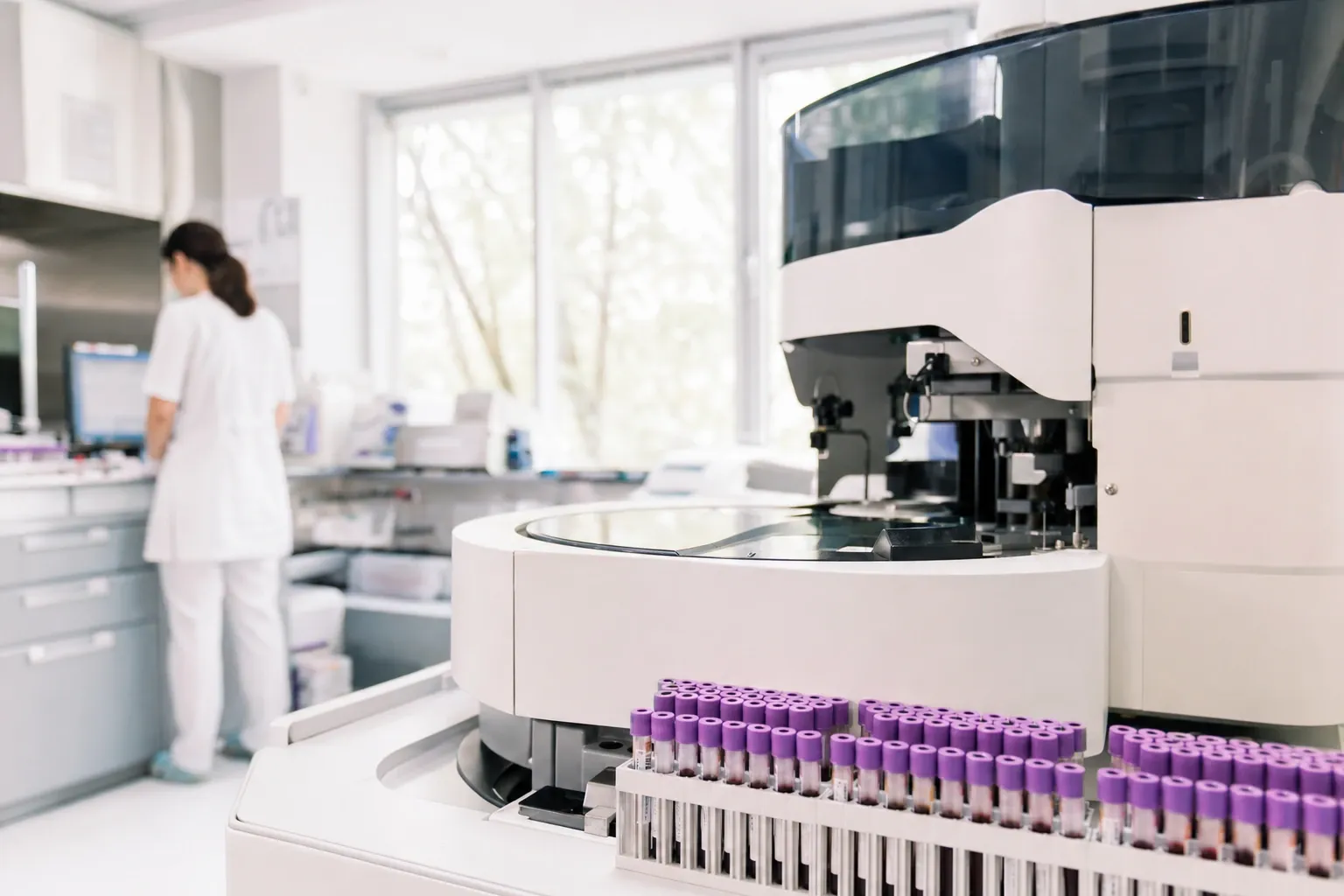
Open two laboratory reports for the same test — one printed in Boston, one in Berlin — and the numbers may look nothing alike. A fasting glucose reads 100 in the first and 5.6 in the second. Neither is wrong; they are the same result expressed in two different unit systems. Understanding those systems, why both still exist, and how to move safely between them is a core skill for anyone who reads laboratory data. This guide gives you the full picture, and when you need to actually convert a value you can do it instantly and privately with our Lab Unit Converter.
Two Ways to Measure a Concentration
A laboratory result is almost always a concentration — an amount of something per volume of blood, serum, plasma, or urine. There are two fundamentally different ways to state that amount.
Conventional units (also called traditional or US customary units) express a mass per volume: milligrams per deciliter (mg/dL), grams per deciliter (g/dL), micrograms per deciliter (µg/dL), and so on. This is the system still used in routine practice in the United States.
SI units — from the Système International d'Unités, the modern metric system — express the amount of substance in moles per volume: millimoles per liter (mmol/L), micromoles per liter (µmol/L), and, for proteins measured by mass, grams per liter (g/L). SI is the reporting standard across most of the world and in the great majority of medical journals.
The mole is the key idea. One mole is a fixed number of particles (Avogadro's number, about 6.022 × 10²³). Reporting in moles tells you how many molecules are present, whereas reporting in milligrams tells you how much they weigh. For chemistry and physiology those are different questions, and the difference is exactly why the SI system was adopted.
A Short History of the Split
Before the 1970s essentially every laboratory used mass units. In 1977 the World Health Organization recommended that member states adopt SI units for reporting laboratory results, and most of the world did so over the following decade. The rationale was scientific coherence: SI gives a single, internationally consistent framework in which amount of substance (the mole) is a base quantity, so results can be compared and reasoned about molecule-for-molecule.
The United States is the conspicuous exception. A well-known attempt to switch US clinical laboratories to SI units in the late 1980s met strong resistance from clinicians accustomed to mg/dL, and the effort was effectively abandoned. The result is the situation we still live with: American practice runs on conventional units, most of the rest of the world runs on SI, and the medical literature is a mix — many journals require SI, sometimes with conventional units in parentheses. There is nothing scientifically inferior about conventional units; the persistence is a matter of clinical habit and installed base, not correctness.
Why the US Still Uses Conventional Units
Three practical forces keep mg/dL alive in the United States. First, clinical familiarity: physicians build intuition around the numbers they trained on — a glucose of 126, an LDL of 100, a creatinine of 1.2 — and changing the scale of every result at once is disruptive and error-prone during the transition. Second, installed infrastructure: laboratory information systems, order sets, clinical guidelines, and decision-support rules are all written around conventional values, and rewriting them carries cost and risk. Third, the absence of a forcing function: unlike countries where a national health system can mandate the change, the fragmented US system has no single authority to compel it. The upshot is that conventional units are entrenched not because they are better but because switching a whole ecosystem is genuinely hard.
Molar Concentration: The Core Concept
To convert a mass concentration into a molar concentration you need one number: the substance's molar mass in grams per mole. The relationship is simple — amount of substance (moles) equals mass (grams) divided by molar mass (grams per mole). A published conversion factor just bundles that molar mass together with the unit scaling between deciliters and liters, milligrams and grams.
Glucose is the textbook example. Its molar mass is about 180.16 g/mol, so to turn mg/dL into mmol/L you multiply by 1 ÷ 18.0182, which is roughly 0.0555. Creatinine (molar mass 113.12 g/mol) converts from mg/dL to µmol/L by multiplying by 88.42. Total cholesterol converts from mg/dL to mmol/L by 0.02586. Because every substance has its own molar mass, every analyte has its own factor — there is no universal multiplier that works for all tests, and that is the single most common misconception about lab unit conversion. For the exact factors and worked arithmetic on the most-searched analytes, see our companion guide, mg/dL to mmol/L: Glucose, Cholesterol and Creatinine Conversion.
When No Conversion Is Needed
Not every result changes between systems. Quantities that are already dimensionless are identical in both: a ratio of two concentrations, a percentage, or a count expressed the same way in both regions. Electrolytes are a special convenience — sodium, potassium, and chloride are monovalent ions whose atomic mass and charge make the old milliequivalent-per-liter (mEq/L) value numerically equal to the mmol/L value, so a sodium of 140 mEq/L is simply 140 mmol/L. These coincidences are worth knowing because they save effort, but they are the exception, not the rule.
A Group-by-Group Tour
Different areas of the chemistry panel behave differently. Here is how the major groups look across the two systems.
Diabetes and Glucose
Glucose moves between mg/dL and mmol/L with the 0.0555 factor; a diagnostic fasting threshold of 126 mg/dL is 7.0 mmol/L. HbA1c is a category of its own: it is reported as a percentage (NGSP) in the US and in mmol/mol (IFCC) elsewhere, related by a defined equation rather than a molar-mass factor. We return to HbA1c below.
Lipids
Total cholesterol, HDL, and LDL all share the same factor (0.02586, mg/dL to mmol/L) because they are all measured as cholesterol. Triglycerides use a different factor (0.01129) because triglyceride molecules are much heavier. So a total cholesterol of 200 mg/dL is about 5.17 mmol/L, while triglycerides of 150 mg/dL are about 1.69 mmol/L.
Renal
Creatinine converts from mg/dL to µmol/L (note the micro-molar scale) with the 88.42 factor — a creatinine of 1.0 mg/dL is about 88 µmol/L. Urea is reported in the US as blood urea nitrogen (BUN) in mg/dL and elsewhere as urea in mmol/L, with a factor of 0.357; uric acid converts at 59.48 (mg/dL to µmol/L).
Liver
Bilirubin converts from mg/dL to µmol/L with a factor of 17.1, so a bilirubin of 1.0 mg/dL is about 17 µmol/L. Enzyme activities such as ALT and AST are typically reported in units per liter (U/L) in both systems and usually need no conversion.
Electrolytes and Minerals
Sodium, potassium, and chloride are numerically the same in mEq/L and mmol/L, as noted. Calcium and magnesium, being divalent, are not: calcium converts from mg/dL to mmol/L at 0.2495, magnesium at 0.4114, and phosphate at 0.3229. This is a classic trap — assuming all electrolytes carry over unchanged.
Hematology
Hemoglobin is reported in g/dL in the US and g/L in much of Europe, a simple factor of 10 (13.5 g/dL = 135 g/L), while some countries use mmol/L via a molar factor. Cell counts are broadly similar but written with different powers of ten.
Hormones and Vitamins
This group has the most varied factors because the molecules differ so much in size. Vitamin D (25-hydroxyvitamin D) converts from ng/mL to nmol/L at 2.496; cortisol converts from µg/dL to nmol/L at 27.59. Here more than anywhere, using the wrong analyte's factor produces a wildly wrong number.
HbA1c: The Conversion That Is Not a Factor
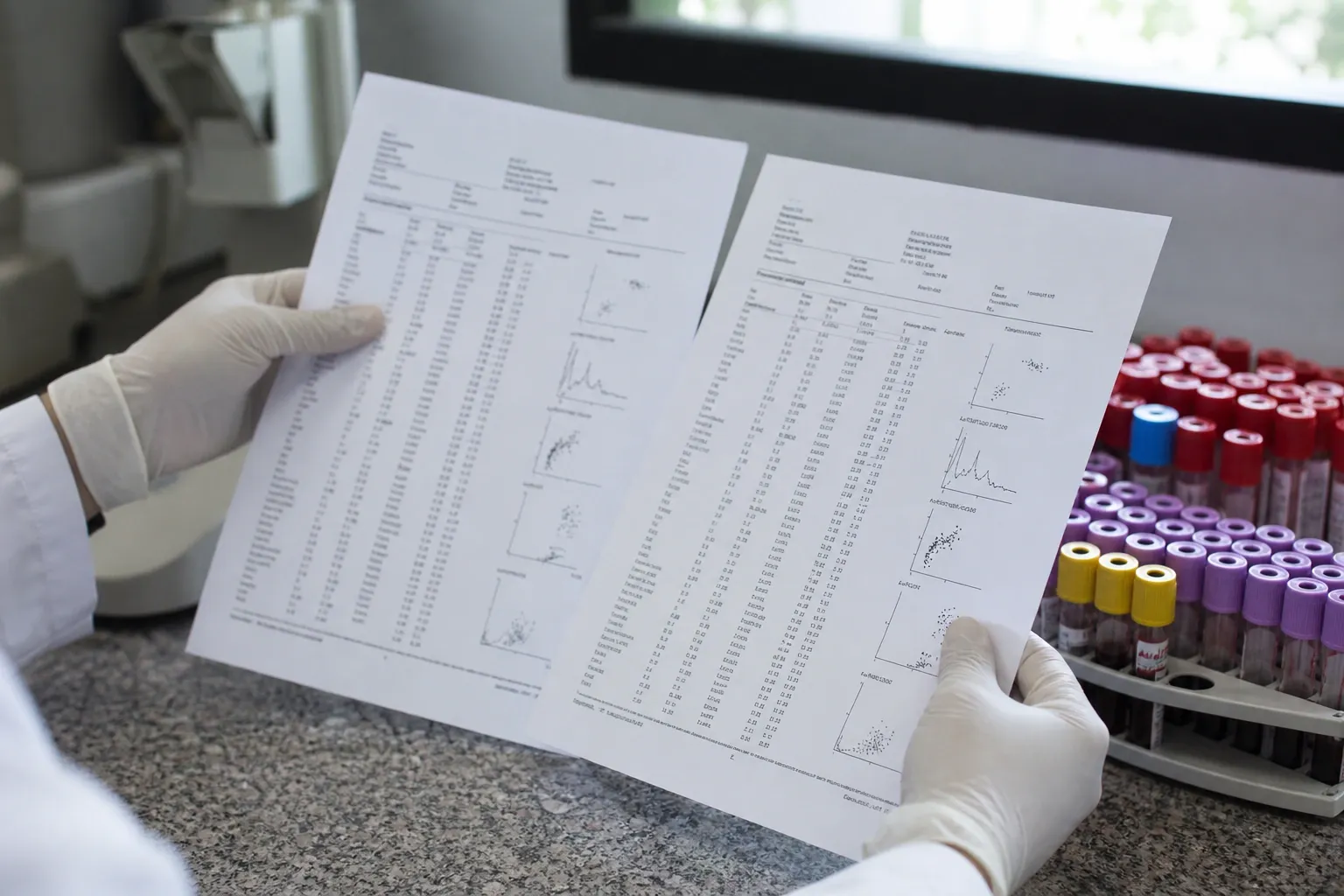
Hemoglobin A1c deserves special attention because it breaks the pattern. It is not converted with a molar-mass multiplier at all. The US reports it as a percentage under the National Glycohemoglobin Standardization Program (NGSP), while most of the world reports it in mmol/mol under the International Federation of Clinical Chemistry (IFCC) reference method. The two are linked by an internationally agreed affine equation — a straight line with a slope and an intercept: IFCC (mmol/mol) = 10.929 × (NGSP% − 2.15), which is the same as 10.929 × NGSP% − 23.5. Because of the intercept you cannot convert HbA1c by multiplying alone. An HbA1c of 7.0% corresponds to 53 mmol/mol; 6.5% corresponds to 48 mmol/mol. Any tool or mental shortcut that treats HbA1c like glucose will be wrong.
Pitfalls in Reading Cross-Border Results
Most unit errors are not arithmetic mistakes; they are recognition failures. Watch for these traps:
- Assuming one universal factor. There is no single multiplier. Each analyte has its own factor tied to its molar mass; applying glucose's 0.0555 to creatinine gives nonsense.
- Missing the scale prefix. Creatinine and bilirubin land in micromoles per liter, not millimoles; calcium is in millimoles. Reading µmol/L as mmol/L is a thousand-fold error.
- Treating all electrolytes as interchangeable. Monovalent sodium and potassium carry over unchanged from mEq/L to mmol/L, but divalent calcium and magnesium do not.
- Converting HbA1c with a factor. It needs the affine NGSP↔IFCC equation, not a multiplier.
- Comparing against the wrong reference range. A converted number still has to be read against the reporting laboratory's own reference interval, which varies by method, population, age, and sex.
Where Unit Confusion Causes Real Harm
Unit errors are not academic. Regulators and patient-safety organizations have repeatedly flagged wrong-unit and wrong-scale mistakes as a source of medication and interpretation errors, particularly when data crosses systems that assume different conventions. A classic hazard is the analyte reported in micromoles per liter being read as if it were millimoles per liter — a thousandfold discrepancy that can make a normal creatinine look catastrophic or a dangerous value look benign. Another is transcribing a result from an international discharge summary into a US record without converting it, so a glucose of "5.6" (mmol/L, normal) is entered into a chart where readers assume mg/dL and dismiss it as implausibly low. Building a habit of always noting the unit and scale on every value — and converting deliberately rather than eyeballing — is one of the cheapest patient-safety practices available.
Units in Research and Data Integration
The stakes are just as high away from the bedside. Multi-site clinical trials, registries, and machine-learning datasets routinely pull laboratory data from institutions on different unit systems. If a data pipeline concatenates glucose values from a US site (mg/dL) and a European site (mmol/L) without harmonizing units, every downstream analysis is corrupted — means, reference-range flags, and model features all become meaningless. The discipline in research data management is to store a canonical unit for each analyte, record the source unit explicitly, and convert on ingestion using analyte-specific factors. This is the same molar-mass arithmetic described above, applied at scale. Developers building health software face the identical problem when displaying results to users in different regions, which is why a transparent, analyte-aware conversion layer is a common requirement.
Why Reference Ranges Still Matter Most
Converting units changes how a result is written, not what it means clinically. A value is only interpretable against a reference interval, and those intervals vary between laboratories because they depend on the analytical method, the instrument, the reagent, and the population the range was derived from. Two laboratories can legitimately report slightly different reference ranges for the same analyte. That is why a converted value must always be compared with the reporting laboratory's own reference range, and why a unit converter — including ours — is a reference and education tool, not a clinical interpreter. It tells you that 7.2 mmol/L glucose is 130 mg/dL; it does not, and should not, tell you what to do about it.
Putting It Into Practice
The practical workflow is straightforward. Identify the analyte, note which unit system the report uses, and convert to the system you think in — being careful about the scale prefix and the analyte-specific factor. For diabetes monitoring, remember that glucose and HbA1c follow entirely different conversion rules. Then interpret against the correct reference range. Doing this by hand is fine for one value, but for speed and to avoid factor mix-ups, an analyte-aware tool is safer.
Key Takeaways
- Conventional units report mass per volume (mg/dL); SI units report amount of substance per volume (mmol/L). Most of the world uses SI; the US mostly uses conventional units.
- The conversion factor is the substance's molar mass combined with unit scaling, so every analyte has its own factor — there is no universal multiplier.
- Some quantities (ratios, percentages, monovalent electrolytes in mEq/L) do not change between systems.
- HbA1c converts between NGSP% and IFCC mmol/mol by an affine equation with an intercept, not by a factor.
- A converted value must always be read against the reporting laboratory's own reference range; conversion is a reference step, not clinical interpretation.
Need to convert a value right now? Open the Lab Unit Converter — it handles about 20 analytes across both systems, shows the exact factor and molar mass behind each result, and runs entirely in your browser so nothing you type is ever uploaded.